The Jo Lab - Our Research
Functional Genomics in Plant Environmental Responses and Development

How different cell identities shape unique transcriptional responses in plants?
Due to their sessile nature, plants developed special strategies to timely respond and acclimate to a dynamic and challenging environment. When encountering stressful conditions, plants have the capability to undergo a complete transcriptional reprogramming to adjust their metabolism, growth, and development to acclimate and survive during environmental challenges.
With the advent of single-cell technologies, we are now uncovering how these responses unfold at the cellular level. Interestingly, while core stress-perception mechanisms are often shared across tissues, the resulting downstream transcriptional responses remain highly cell-type specific.
This raises a fundamental question: how does the same environmental signal translate into distinct transcriptional programs across different cells of the plant? Using state-of-the-art genomic tools, including single-cell sequencing and functional genomics, we hope to identify the drivers of this specificity.

How Plants Reprogram Their Transcriptome in Response to Environmental Cues?
My research has been motivated by a fundamental question: how does the environment shape the onset of new transcriptional programs in plants?
In my group we combine functional genomics and single-cell technologies to understand how environmental factors shape plant responses through the lens of transcriptional and chromatin organization.
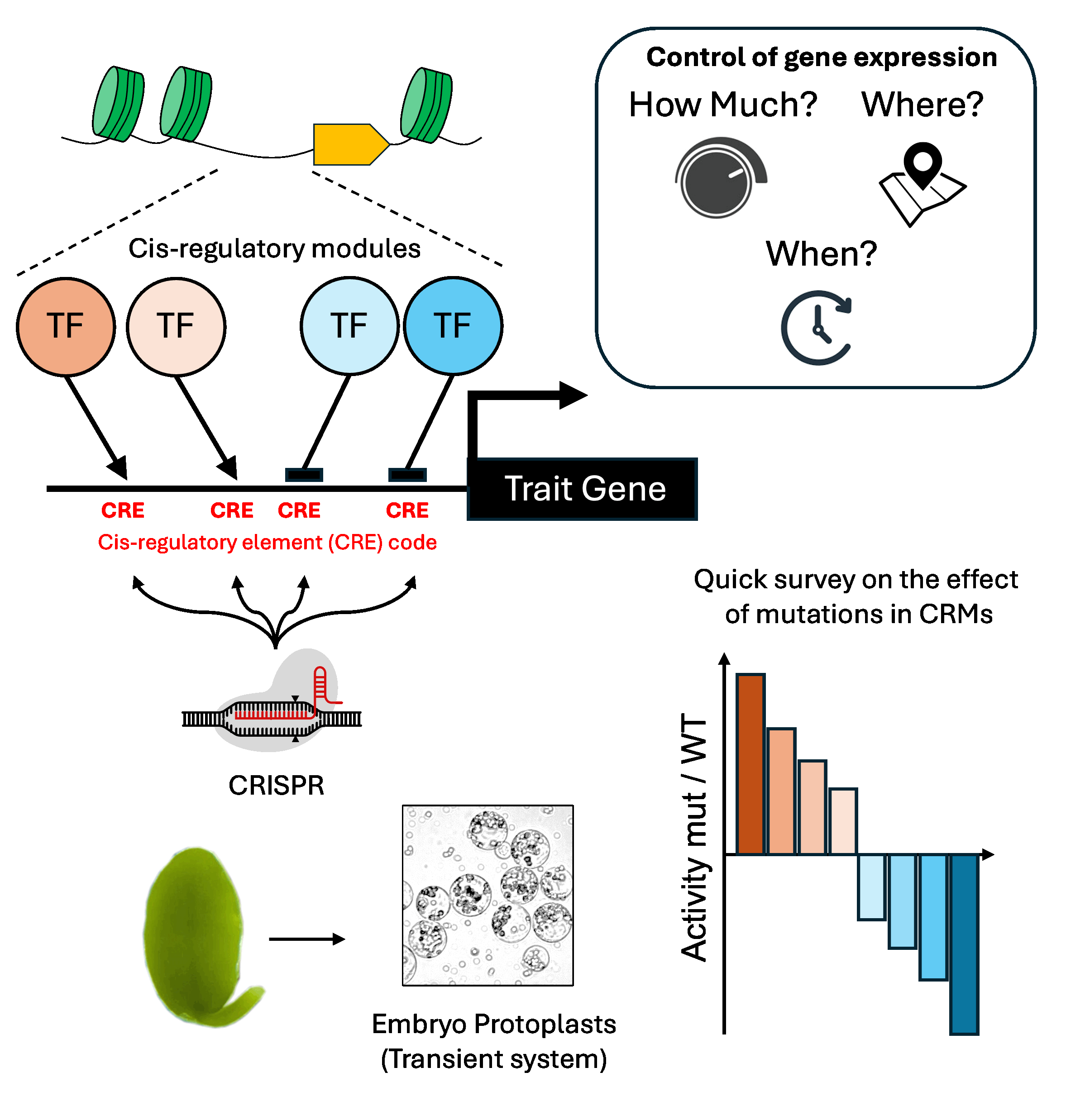
Using functional genomics to quantitatively engineer crop traits by genome editing
Conventional mutagenesis and gene editing approaches typically target coding sequences to alter gene activity. However, these all-or-nothing strategies do not enable precise quantitative control of traits. In previous work, I demonstrated that functional genomics approaches can be used to identify non-coding regulatory regions that serve as hubs for transcription factor interactions regulating gene expression. Targeted modification of certain cis-regulatory elements (CREs) allowed for the quantitative control of gene activity. These findings highlight the potential of CRE identification and manipulation as a powerful strategy for quantitatively fine-tuning gene activity and plant traits. Our group will focus on identifying and targeting these cis-regulatory modules (CRMs) and leveraging them to achieve quantitative control of genes underlying plant responses.